
RAG for Municipal Documentation and AI Agent for Document Generation
AI-powered access to municipal knowledge and fast drafting of recurring administrative documents.
An Italian municipality serving around 45,000 to 50,000 residents and employing about 240 people needed to improve access to institutional information and streamline the production of recurring administrative documents.
Overview
The municipality managed four institutional portals, including two main public-facing websites, with content spread across different sections, formats, and update cycles. This fragmentation made it difficult for staff to provide fast, consistent answers and for citizens and businesses to find reliable information about services, procedures, and administrative acts.
The operational impact was substantial. Municipal staff estimated that repetitive requests absorbed at least 50% of phone time across several offices, while repetitive searches and drafting activities accounted for roughly 10,000 to 20,000 man-hours per year. The municipality also produces about 3,000 administrative acts annually, with an average weighted drafting time of around three hours per act.
Challenge
The challenge was not just to build a search tool, but to turn fragmented institutional content into a usable operational knowledge system. Information was distributed across multiple portals and document sets, often with inconsistent structures and varying levels of detail. Staff needed a faster, more reliable way to access accurate information, while citizens and businesses needed a simpler way to interact with public services and procedures.
A second challenge involved administrative drafting. Many recurring acts followed standard patterns, yet still required significant manual work. The municipality needed to speed up production without compromising consistency, traceability, or human oversight.
Two critical issues emerged during implementation:
- Some of the knowledge needed for accurate outputs was not present in the available documentation, but existed only in the experience of municipal staff. This was resolved by formalizing that knowledge and integrating it into the knowledge base.
- Conflicting information across documents created uncertainty for the system. Tuboolar addressed this by introducing publication-date controls so that the most recent information would prevail.
Solution
Tuboolar developed an integrated solution combining a Retrieval-Augmented Generation (RAG) chatbot with an AI-powered document-generation agent. The project reached operational use in four months, including testing and fine-tuning. Two municipal staff members supported the setup throughout the project, and eight additional users participated in beta testing.
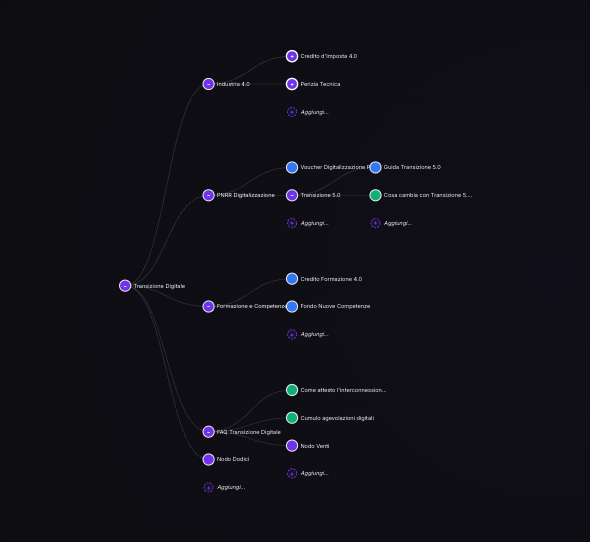
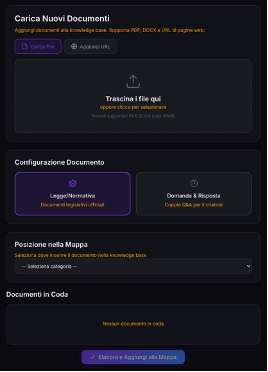
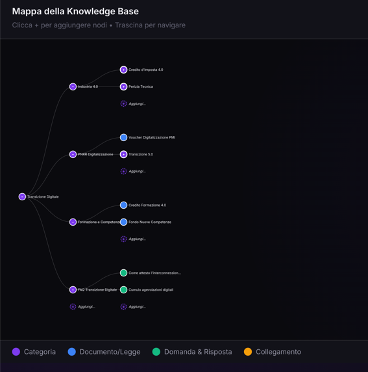
The first step was the ingestion, normalization, and structuring of content from official institutional sources. Around 45,000 pages and documents were indexed within the broader knowledge system. Not all of this material was made directly searchable: some obsolete content was synthesized to improve the system’s ability to draft specific document types, while being excluded from retrieval to avoid surfacing outdated information.
On this foundation, Tuboolar built a RAG chatbot for internal and external assistance, although the first rollout focused on internal use. For staff, the chatbot made it faster to consult procedures, services, and institutional content without manually navigating multiple websites and repositories. The platform was also connected to a document-generation agent able to produce structured drafts of recurring administrative acts, with outputs that remain fully reviewable and editable before final validation.

Results / Impact
The solution reduced informational friction and improved the municipality’s ability to access and reuse institutional knowledge. System response times are typically between three and five seconds, aside from occasional slowdowns related to the regional private cloud infrastructure hosting the platform.
The strongest impact was on document drafting. Time required to prepare administrative acts was reduced by about 70% in the early phase and has now reached reductions of up to 90% as the system improved and human intervention decreased. In the first operational period, between 300 and 500 acts were generated with system support, only in the first months.
The municipality has not yet collected final data on the reduction of repetitive front-office and call-center requests, since the system is not yet fully at scale and is currently used mainly internally. However, the target is to reduce time spent on repetitive interactions by at least 70%, excluding users who continue to rely on offline channels.
Overall, the project shows how AI can be applied in the public sector as a practical operational tool, improving information access, supporting staff, and accelerating standardized document workflows.