
AI-Based Drill Bit Consumption Estimation in Composite Manufacturing
Real-time AI-powered ultrasonic monitoring to extend diamond bit life and prevent costly material scrap.
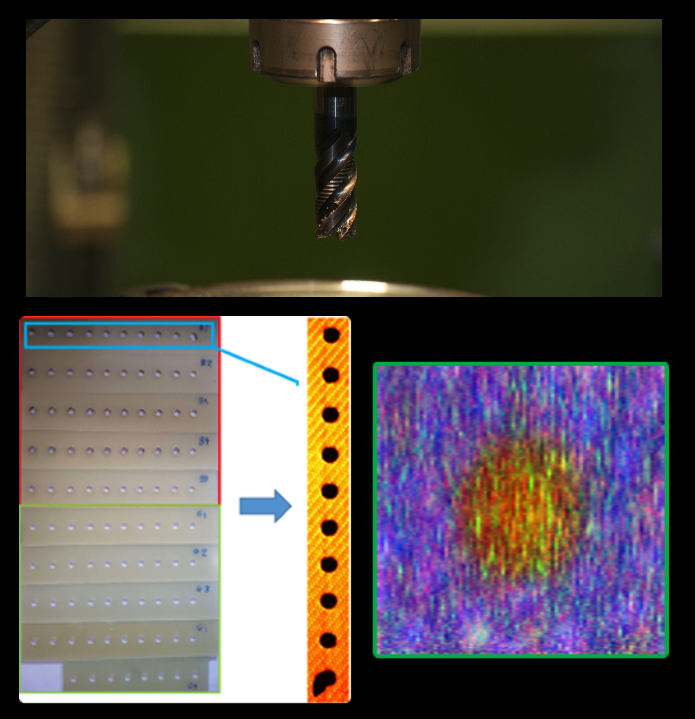
A manufacturer producing drilled composite components with diamond-tipped tools needed to improve hole quality control, reduce scrap, and make better use of expensive tooling. In this type of process, both the composite material and the drilling bits have a high cost, and a worn tool can compromise an entire sheet before the issue becomes visible.
Overview
Although each diamond bit was guaranteed for 10,000 holes, its actual lifetime could vary significantly and sometimes extend to nearly double that threshold.
This variability created a difficult production problem. Replacing the bit too early meant discarding usable tool life, while replacing it too late risked damaging high-value parts. With each bit costing around €5,000, each faulty part costing about €2,000, and production reaching roughly 20 parts per day, the company needed a faster and more reliable way to detect degradation before visible defects appeared.
Challenge
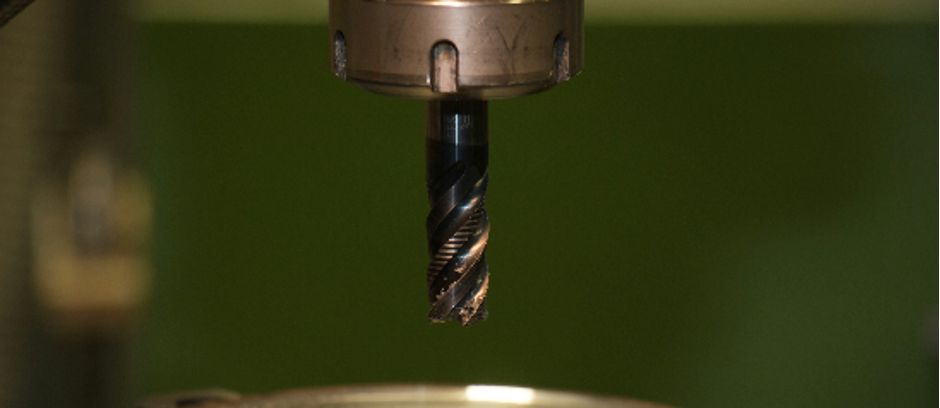
The main challenge was evaluating tool condition and hole quality in real time, within the very short interval between one drilling cycle and the next. Traditional inspection logic was too slow or too late: by the time wear became obvious, the process had already produced scrap.
At the same time, relying only on nominal lifetime thresholds was inefficient, because actual tool duration varied depending on operating conditions and wear progression.
The company therefore needed a system capable of identifying subtle signs of degradation before bit failure occurred and before hole quality dropped below acceptable standards. This had to happen fast enough to support immediate operator action, without slowing down production or adding manual inspection steps.
Solution
Tuboolar developed an automated hole quality estimation system based on ultrasonic sensing and AI-driven signal analysis. The platform monitors the drilling process in real time and evaluates each hole within a 150-millisecond analysis window between consecutive operations.
This makes it possible to detect degradation patterns early, before defects become visible on the component and before the bit reaches catastrophic failure.
The system continuously processes ultrasonic data and uses AI models to estimate the condition of the tool and the quality risk associated with ongoing production. When the monitored signals indicate that the diamond bit is approaching a critical state, the operator is alerted immediately and can intervene before the tool breaks or damages the workpiece.
This approach transforms drilling control from a fixed-threshold replacement strategy into a condition-based decision system. Instead of relying only on nominal tool life, the manufacturer can use the actual state of the bit to extend usage safely, protect hole quality, and avoid unnecessary waste.

Results / Impact
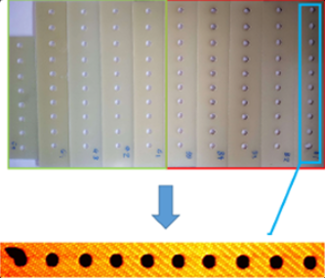
The solution allowed the company to drastically reduce the risk of defective parts caused by worn or failing diamond bits, while maximizing the useful life of each tool. By detecting degradation before visible defects emerged, the system improved process reliability and helped prevent costly scrap events.
The economic impact was significant. Savings were estimated at no less than €20,000 per month, generated by a combination of optimized bit usage and the prevention of damaged parts. Based on these savings, the return on investment was achieved in approximately six months.
Beyond the direct savings, the project established a more robust production model for composite drilling: faster quality assessment, earlier risk detection, and a more intelligent balance between tool utilization and process safety.